Traditions that shape volleyball unity
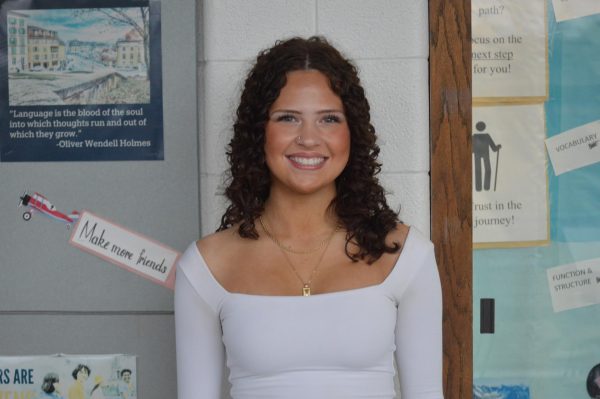
From team dinners and pre-game chants to bus playlists and pep talks, traditions play a major role in uniting athletes as a team and boosting their performance. At Lake Zurich High School, both the volleyball and poms teams use their unique rituals to build connection, focus, and confidence before taking the court or floor. Mya Weigman, junior on the volleyball team, shares how each ritual can strengthen the volleyball team’s connections and memories on and off the court.
“We have team dinners. The day before our home games, one of us will host a team dinner wand sometimes we watch film from other teams, but usually we just like to play games and talk about our game, and set goals,” Weigman said. “[At games,] after we shake hands with the other team, we go in a circle, and we all put our left foot in the circle, our setter will tap all of our feet. After she is done, we tap her foot for good luck. Then we also always high five our coach Rachel, and we do little hand hugs where our thumb wraps around our coach’s fingers.”
These pre-game traditions set the tone for connection, giving the team time to strengthen their bond before stepping onto the court. Samantha Makhlouf, junior on the volleyball team, shares her insight on these traditions and how they can affect the team as a whole.
“Traditions like putting our left foot in the center help make us all feel like we are there for each other and that we can lean on each other and play for the person next to us,” Makhlouf said.
Beyond these pre-game traditions, their sense of togetherness continues on game days, from the bus ride to the first serve.
“[On the way to our games,] we always have a certain playlist, like our hype up playlist that we listen to on the bus before we get there. [Once we arrive,] we will individually go in a circle and say our goal, and then we do a big team goal, or a few of them,” Weigman said.
Even after the game, the team finds ways to celebrate their close connection and bond through shared pre-game traditions.
“Traditions like singing the fight song on the bus help us bond because it is a fun thing we get to do every time we pull into the school no matter if we won or lost,” Makhlouf said.
Each season, the volleyball team builds on these traditions with a new motto that captures their shared goals and purpose.
“Every season, we have a new team motto, and this year’s is ‘lean on each other’. Even when we are losing or in a timeout, our coaches always tell us to lean on each other. I think that knowing we have the support from our teammates is really helpful,” Weigman said.
The team’s motto goes beyond just words, it is part of a mindset that defines how the team can support one another no matter what.
“The meaning of the team motto is your always playing for the person next to you, not yourself. Through that, we can lean on each other and win,” Makhlouf said.
Through these traditions, the team continues to grow closer on and off the court.
“Going back to ‘leaning on each other’, everyone is there to help you and support you and lift you up. At dinners, we always talk about the team that we’re playing, and sometimes we even watch their films. [This helps us] expect what the team is going to do [in the game],” Weigman said. “We gain confidence from that. And I do think that our team’s traditions make our group stronger, because we all get to know each other really well.”
Inside the traditions that fuel Poms
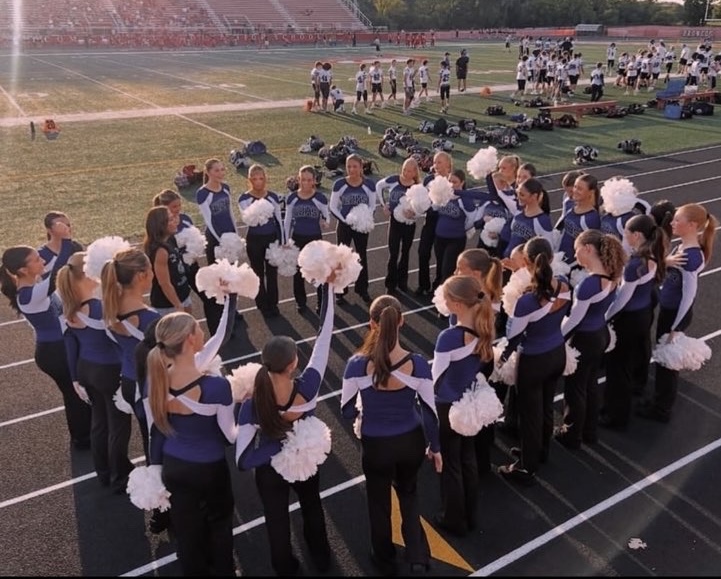
Just like the volleyball team, the Poms team has their own unique rituals that bring them together before every performance. Zara Tzonev, junior on the Poms team, shares some of the special traditions that the team has that allow them to come together and bond.
“Some special traditions we have is during football season, right before we perform, we always do a big circle of all the girls’ arms around each other. We put our right foot out, and our coaches repeatedly chant ‘who’ over and over again and then they say ‘Who we be?’ and we say ‘LZ’ and we repeat that chant and then lastly we go ‘123 bears’. Then we all put our right hand in and we say a word that corresponds with that type of day,” Tzonev said.
These traditions extend beyond football season, carrying into a high-pressure environment of competition season.
“At awards at a competition, we all sit in a big circle, and we all cross our pinkys with the people sitting on our right and left, and we always go back to it right before any place for any team is announced,” Tzonev said.
These traditions can not only help a team connect together, but it also can help a team prepare mentally and physically before they take the floor.
“Once we get to our classroom [that we change in at a competition], our coaches make us visualize. Basically, we [move away] all distractions that are near us and close our eyes. [Our coaches] play the music really loud, and we have to just go through [the dance] in our heads while saying corrections and yelling out things to [help us be prepared to] hype each other up while we are performing,” Tzonev said.
These pre-performance rituals often turn emotional, reminding dancers of the hard work and dedication that brought them there.
“Before competition, we have a pep talk with our coaches. It is kind of like a wholesome moment, and they show that they are proud of us and the progress we have made,” Tzonev said. “When you hear that your coach is proud of you, it makes you feel like you are in the right space and you are meant for this. So it just reminds me that even though there are tough practices sometimes, it is all worth it in the end.”
Even in early mornings or on long bus rides to competitions, the team finds a way to lift their spirits and keep their energy up so they continue to be prepared for competition.
“No matter what time it is, we just blast music and pump each other up. We have fun, upbeat songs, which just puts us all in a good mood[…] [the song] Gangnam Style just gets us all really hyped up. Once we hear it, we know we have to stand up and start doing it,” Tzonev said.
The energy that these traditions generate have many benefits that will carry the team a long way. For example, these traditions may lessen the nerves and doubts that build up before taking the stage. Terri Johlie, one of the coaches of the Poms team, elaborates on how these traditions create confidence in the long run.
“I think it is important for girls before they compete to do the fun [traditions] to kind of help get rid of the nerves and help build each other up. And those who needed a little bit more, to kind of let go of some of those nerves so they feel confident when they go out there and perform,” Johlie said.
All of these shared experiences contribute to identity rooted in the team’s traditions.
“I think [the traditions] are a part of our identity, and I think it’s important to keep what we do as part of who we are,” Johlie said. “We are different from other teams and what they have established, but that is part of who we are, and we identify with that, and I think that is important.”