
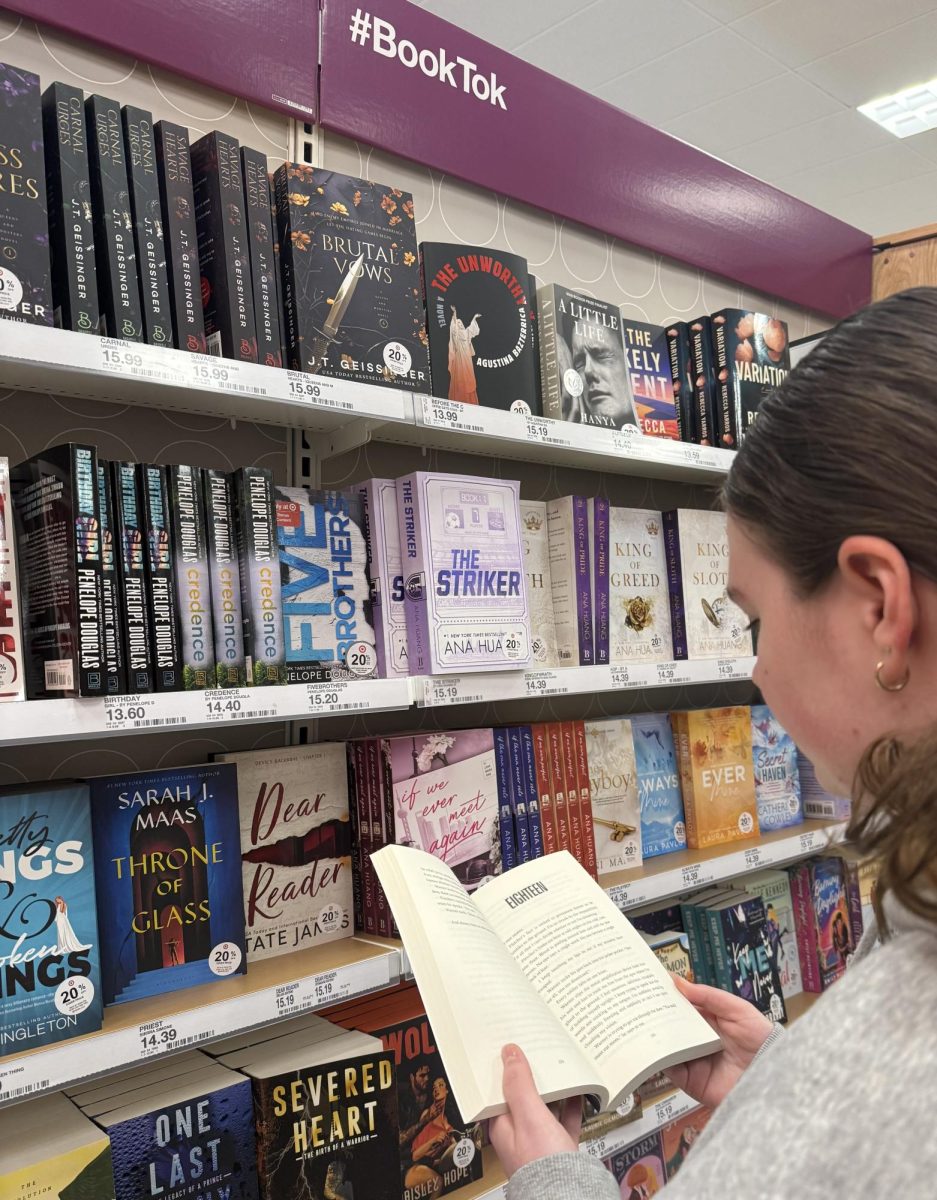
“What’s driving decline in U.S. literacy rates?” From The Harvard Gazette, and “America Is Sliding Toward Illiteracy” by The Atlantic are a few major headlines that have been in the public eye recently. However, are these claims about the future of America’s literacy really true? According to the National Assessment of Educational Progress (NAEP), 33% of eighth graders scored “below basic” on reading skills and only 14% of students said they read for fun almost every day.
There are many reasons why reading skills and literacy rates are dropping amongst teenagers in the United States. Some may argue one reason is the shortening of attention spans due to the rise of social media. Cicely Embree, sophomore, describes this idea, along with why she does not find herself reading as much now compared to when she was younger.
“Personally, I feel like social media has kind of ruined attention span, at least for me anyways,” Embree said. “I literally can’t focus on reading a book.”
Another reason why many teenagers don’t read as often on their own time is because it is hard to find time between schoolwork and extracurriculars. With English being a required class all four years of high school for students to graduate in Illinois, the reading analysis done in class can drain students before they have a chance to read their book of choice during the day. Elena Jakubek, sophomore, mentions her experience with balancing reading for school with reading for fun.
“I feel like in some way [reading in school] does ruin reading for one’s own interest because it can change people’s perception of what a good book actually is,” Jakubek said. “It also does take away actual time to read for fun.”
Even though teenagers reading for fun outside of school has been statistically dropping for decades, there has been an uptick over the past few years. While social media might have shortened attention spans for some, it has also been the reason why more young people are starting to pick up books. According to The Bookseller, with the rise of social media platforms, online communities like “BookTok” have caused 59% of 2,001 young people ages 16-25 discover a passion for reading.
“I do think [BookTok] positively influences the amount people read, because even I have fallen for the BookTok trends,” Jakubek said. “I guess people really do just follow trends.”
According to the American Psychological Association, “less than 20% of U.S. teens read a book, magazine, or newspaper daily for pleasure, while more than 80% say they use social media every day.” For teenagers, it is all about finding the right balance between being engaged online or through a piece of writing.
“I think with more technology coming out people should just start reading more because it actually really helps your brain,” Jakubek said. “I feel like reading has helped me become more capable of understanding literature.”
Not only does reading daily improve cognitive function, but a study done by the National Library of Medicine supports the idea that there are many physical benefits as well. The research states that a “20% reduction in mortality was observed for those who read books, compared to those who did not read books.” So, next time you find yourself doomscrolling on social media, try picking up a book, popular on BookTok or not, to pass the time instead. Besides for pure enjoyment, Jakubek mentions why she believes reading outside of the classroom is essential for teenagers.
“There are many benefits to reading outside of school, because it helps you discover your own passions,” Jakubek said. “It helps you understand and be able to analyze literature, which will help you in school.”